cardinal pell
Slide Background

The world groans and the Church stumbles. Men fail to act and inspire. To whom can we turn for an example?

GEORGE CARDINAL PELL.

57+ PRIESTLY SERVICE
ABOUT BOOK

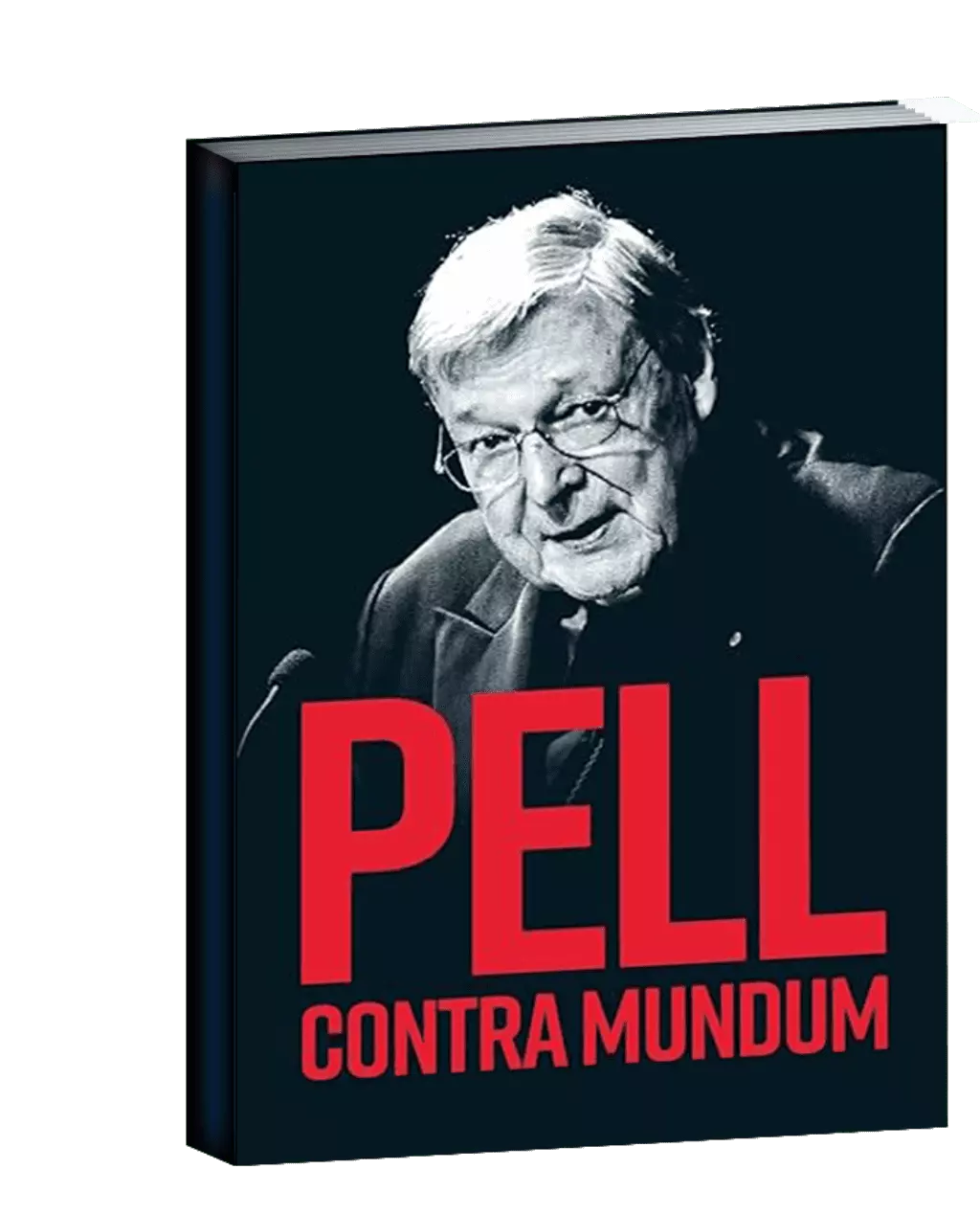
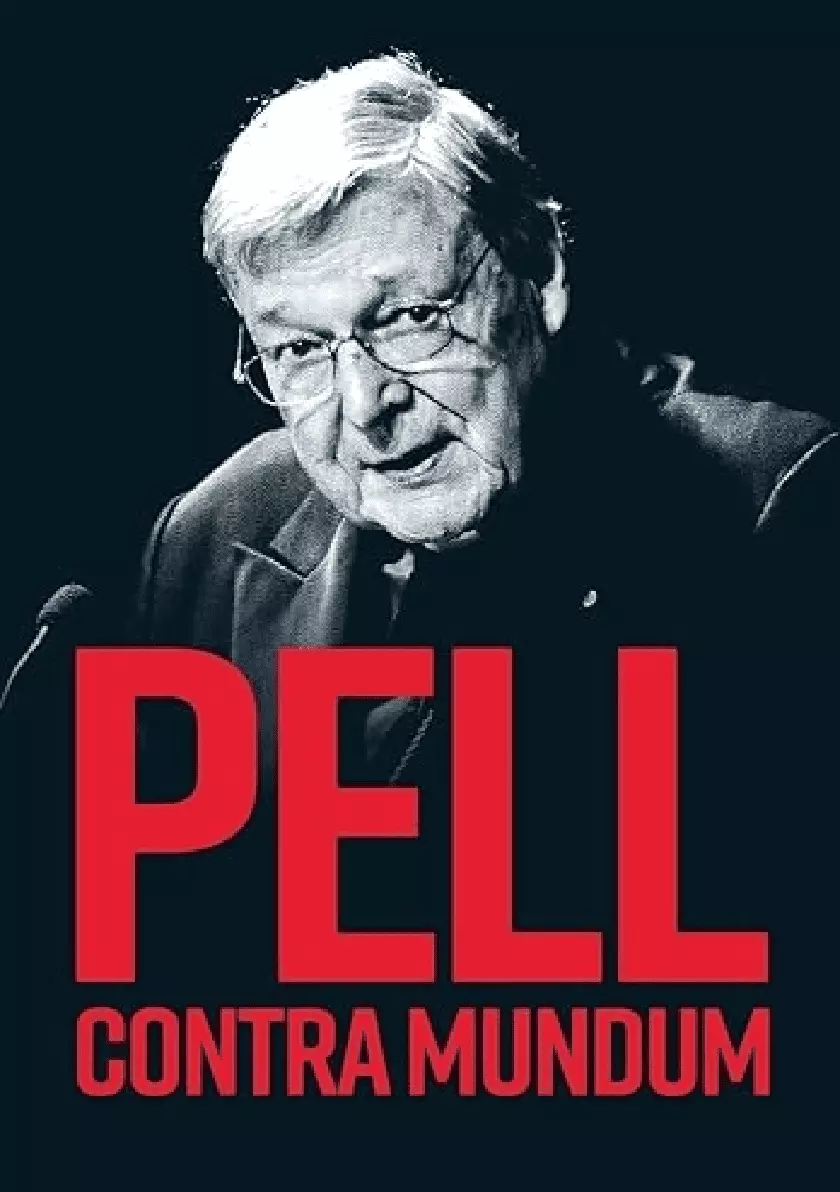
PELL CONTRA MUNDUM

The world groans and the Church stumbles. Men fail to act and inspire. To whom can we turn for an example?

George Cardinal Pell. A white martyr with insights into the spirit of this age and the ongoing crisis in the Church. A skilled administrator and captivating preacher.

A celebration of a life lived against the world and for the Lord and His Church that brings together writings from the late Cardinal Pell and contributions from Oswald Cardinal Gracias, Rev. Robert A. Sirico, Danny Casey, and George Weigel.

All texts are in English, Italian, Spanish, and French.

ABOUT CARDINAL

A WHITE MARTYR WITH INSIGHTS INTO THE SPIRIT OF THIS AGE

Cardinal George Pell, a deeply respected and beloved figure within the Church, has left an indelible mark on the faithful. "Pell Contra Mundum" beautifully captures his profound contributions and is poised to become a significant topic of discussion among bishops and the wider Catholic community convening in Rome.

QUOTATIONS

PELL CONTRA MUNDUM

We know Jesus's call, through the Baptist, to conversion: "Repent, because the kingdom of God is near" (Mt 4:17), but we older Catholics, or rather, adults, are also blessed because we have lived, in almost forty years, in the time of John Paul II and Benedict XVI.

The yeards have been pivotal for all of the historyy. The papacy of John Paul II, one of the greatest popes in the history of the Church, not only for his role in the collapse of communism, but also for the entire Western world because, after Vatican Council II, the churches in Holland and Belgium collapsed radically — with the danger that this collapse could be even more extensive. I believe that John Paul somehow stabilized the Church in the Western world.

George Cardinal Pell

George Cardinal Pell was the most visible opponent of dictatorship of woke relativism in Australian public life, a vigorous opponent of what John Paul II dubbed the “culture of death” and its embrace of abortion and euthanasia, an intelligent critic of “new atheists” like Richard Dawkins, and the scourge of prophets of catastrophic, anthropocentric climate change like Bill McKibben.

He faced down the vicious, malfeasant manipulation of the criminal justice system in the Australian state of Victoria, which cost him 404 days in prison in solitary confinement before he was triumphantly acquitted of implausible charges of “historic sexual abuse” by the High Court of Australia.

George Weigel

I heard as a young seminarian the names of József Mindszenty of Esztergom-Budapest, Josef Beran of Prague, Josyf Slipyj of Lviv.

Those ‘giant’ cardinals were imprisoned and exiled. Some from that period are already beatified: Alojzije Cardinal Stepinac of Zagreb and Stefan Cardinal Wyszyński of Warsaw. I read of their stories and admired from a distance their witness.

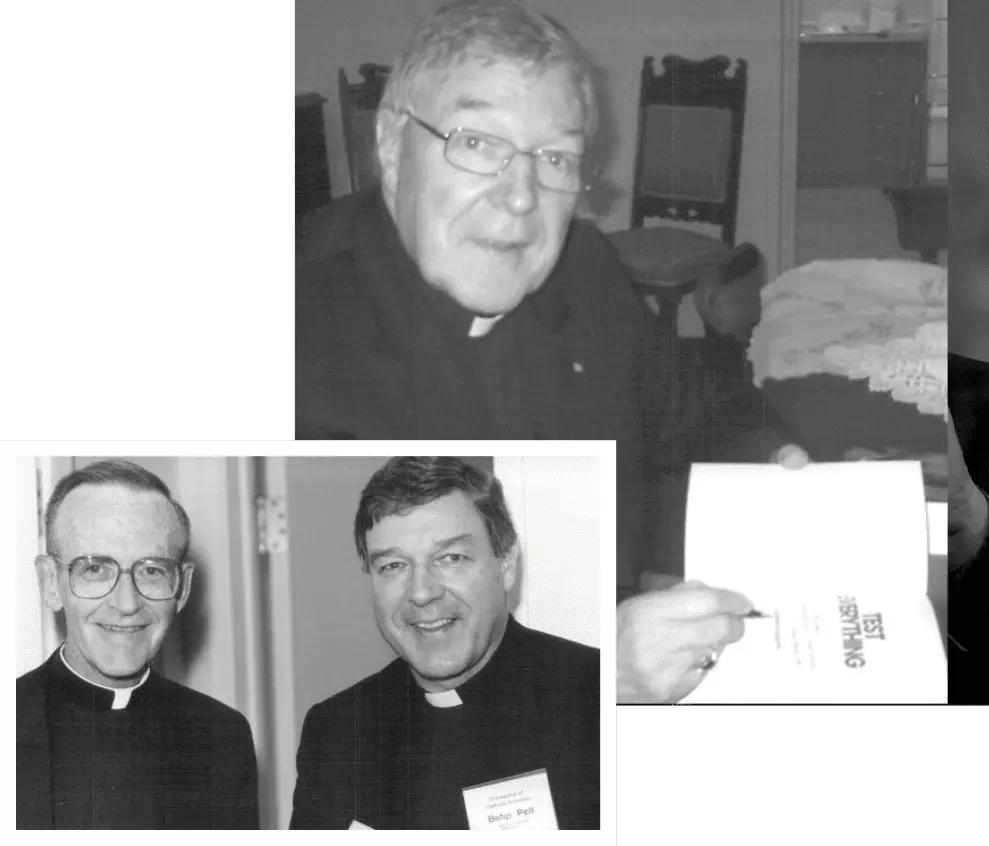
I would now add George Pell to that list, a close colleague, a friend, and brother in the College of Cardinals. He lived in an exemplary fashion the cardinalatial mission of fortitude.

Oswald Cardinal Gracias

VIDEO

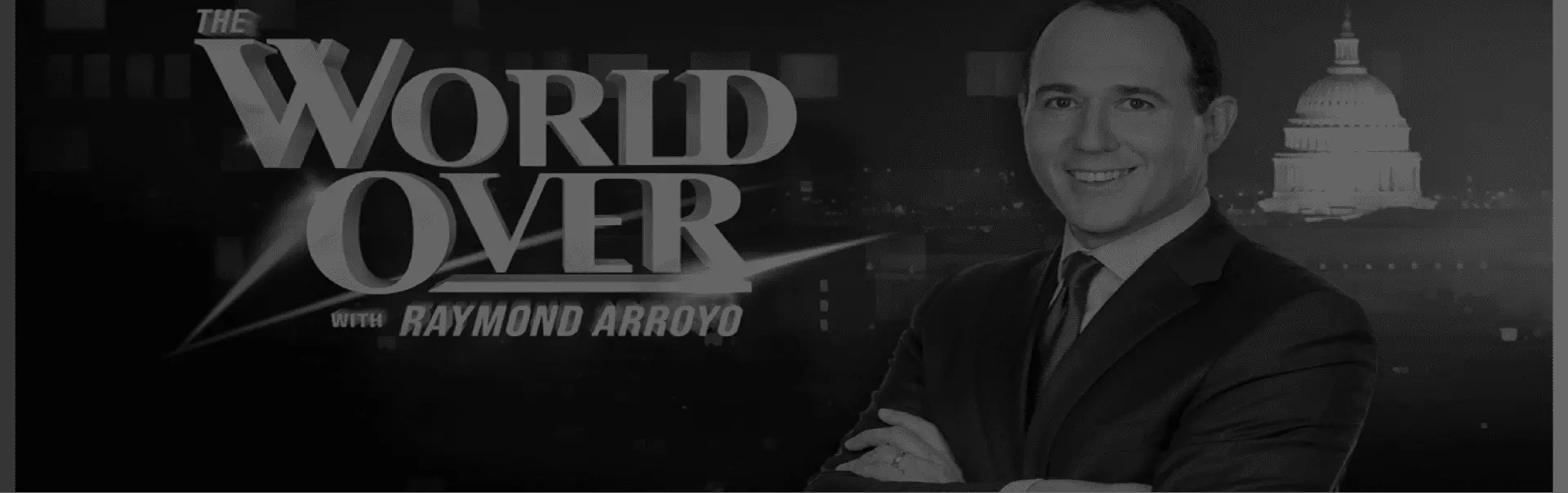
THE WORLD OVER OCTOBER 19, 2023 PELL CONTRA MUNDUM: FR. ROBERT SIRICO WITH RAYMOND ARROYO

BOOKDETAILS

Publisher :

Connor Court Publishing Pty Ltd
(16 Sept. 2023)

Language :

English, French, Spanish, Italian

Paperback :

250 pages

SBN-10 :

1922815748

ISBN-13 :

978-1922815743

Dimensions :

15.24 x 1.35 x 22.86 cm

REVIEWSOF THE BOOK

BY CATHOLIC WORLD REPORT

NEW BOOK PAYS TRIBUTE TO CARDINAL PELL AS A CHAMPION OF ORTHODOXY

PELL CONTRA MUNDUM, EDITED BY FR. ROBERT A. SIRICO, CONTAINS ADDRESSES GIVEN BY PELL IN THE FINAL MONTHS OF HIS LIFE, AS WELL AS ESSAYS ABOUT HIS LIFE AND LEGACY

Although Cardinal Pell was just 81 years old, his death in January 2023 came as a surprise. He is already greatly missed. The robust, 6’4”, former rugby player from Australia was a courageously outspoken cardinal, a confessor, and defender of the Catholic tradition.

Pell Contra Mundum is a memorial to his legacy as a champion of orthodoxy in this current time of moral and theological confusion.

The publication includes three addresses from Cardinal Pell, give within his last six months, and four essays from a selection of his coworkers in the faith: Oswald Cardinal Gracias, Danny Casey, Rev. Robert Sirico, and George Weigel. These reflections shed light on a cardinal archbishop who was not afraid to challenge those who would attempt to remake the Church in the image of the ‘spirit of the age’. (All texts in English, Italian, Spanish, and French).

The title, Pell Contra Mundum (‘against the world’), is a reference to St. Athanasius (AD 293-373), the great fourth-century hero of Christian orthodoxy who was exiled and imprisoned on numerous occasions. Athanasius refused to capitulate to the majority of bishops, rulers, and theologians of his day, who had become duped by the Arian heresy, which rejected the divinity of Christ.

Pell was consistently clear that the theological issue of our day is also Christological: Jesus is God and his teachings (on marriage, for example) are true and unalterable. Athanasius and Pell unpopularly confirmed the constant Catholic teaching, which is their prerogative: Christ established His Church, entrusting it to His Apostles and their successors (the bishops), whose mission it is to safeguard the teachings of Christ without deviation.

In the first essay, Oswald Cardinal Garcias gives a brief summary of George Cardinal Pell’s life, awarding him the title, ‘white martyr’, for his testimony as a confessor of the faith. Garcias recalls the false accusations that were made against Pell and his unjust imprisonment in solitary confinement for 404 days, during which time Pell wrote his Prison Journal, which George Weigel dubs a contemporary “spiritual classic.”

Danny Casey had been working with the cardinal since 2003 in Sydney and followed Pell to Rome when Pope Francis made Pell the Prefect of the Vatican’s Secretariat for the Economy. Casey helped Pell make significant reforms at the Vatican Bank and writes about the financial scandals Pell had to deal with (and that persist) in the Vatican over the past 14 years.

Sirico and Weigel fill in the narrative and tie together Pell’s work history and focus.

The jewel of this book is found in Pell’s own words. In an address to Campion College, Australia, he encouraged the Catholic liberal arts students to ignore the taunts and ridicule of ‘woke’ society and not be afraid to learn and preserve the Western tradition: to “inculcate a love and pride of our tradition, just as we love our families while recognizing their failures.” In a final address, three days before he died, he honored the memory of Popes John Paul II and Benedict XVI, as “true Christians” who “were optimistic”, who “understood the importance of the sacraments [especially the Eucharist]”, and who “understood the role of Peter’s successor in the life of the Catholic Church.”

In reference to the synodality project, the subject of an essay that was published post-mortem, Pell threw the gauntlet before the feet of his brother bishops: “The synods have to choose whether they are servants and defenders of the apostolic tradition on faith and morals, or whether their discernment compels them to assert their sovereignty over Catholic teaching… So far, the synodal way has neglected, indeed downgraded the Transcendent, covered up the centrality of Christ with appeals to the Holy Spirit, and encouraged resentment, especially among the participants.”

Pell was surprisingly optimistic, even humorous in his defiance of those who would reinvent the Church. He recognized numerous faithful Catholics working for good and encouraged them to be steadfast to the tradition. “The culture wars continue,” he noted to the students at Campion College, “and while our losses are considerable, the field has not been lost. The many victims of the chaos will be increasingly open to our message and appreciative of your help.”

Pell has passed away, but this tribute to him trumpets a challenging proclamation: Who will now champion the truths of our faith that Pell so boldly defended? Let Pell’s life be an inspiration to every bishop and cardinal working in fidelity to the Magisterium. Let the white martyr, George Pell, give you courage and hope!

BY NATIONAL CATHOLIC REGISTER

NEW BOOK: CARDINAL PELL’S MAIN CONCERN ABOUT THE SYNOD ON SYNODALITY WAS ITS ATTACK ON DIVINE REVELATION

VATICAN CITY — Cardinal George Pell was “prescient” in identifying “all the key issues” about the current Synod on Synodality, but what troubled him most was “the attack on divine Revelation” with the resulting possibility that development of doctrine would have no safeguards, Father Robert Sirico has said.

The co-founder and president emeritus of the Acton Institute for the Study of Religion and Liberty said the late Australian cardinal was not just concerned about “the disregard for the tradition of the Church,” but the consequences of obscuring divine revelation at the synod so that “the Holy Spirit can tell you something in the first century and tell you the opposite in the second, in the third, or the 21st century.”

Father Sirico has edited the new book Pell Contra Mundum (Connor Court Publishing, Australia), a tribute to the Australian cardinal who died in January, and published to coincide with the October assembly currently taking place in the Vatican.

In this Oct. 11 interview with the Register, Father Sirico explains his motives for compiling the book and what the cardinal would make of the synod so far. He also pays tribute to Pell’s strength of character that won him the respect of the Pope and other cardinals.

Father Sirico, what were your motives for publishing this book on Cardinal Pell?

It really grew out of the sadness, the grief of Cardinal Pell’s death. I was with him the night of Pope Benedict’s funeral. We had dinner in his apartment. Cardinal Zen was there and a few other people, not many, but a few other people. I’d known Cardinal Pell for more than 25 years, and over these last few months we’d been talking about the Synod and things happening in the Church. And so I planned to see him again, obviously. We knew he was going in for the surgery. I left Rome, I had to go to Phoenix for a speech, and then that morning got up to the call that he had died in the hospital. So there was grief, but then I just went over in my head the kinds of things we had been talking about. And that day, too, as I recall, maybe later that day or the next day, the piece in the London Spectator came out.

The piece on his concerns about the Synod on Synodality?

Yes [the article was titled The Catholic Church Must Free Itself From This Toxic Nightmare]. So as I began to think about it, and then I was asked to give a tribute to him, it was probably later that month or in February, I had to put together some thoughts. And that’s when the idea for this book began to emerge, particularly as I compared him to Cardinal [John Henry] Newman. It was said Cardinal Newman was the silent voice of the Second Vatican Council because he was a reference point so often, and I thought Pell might become a reference point at the Synod. As you look at what he wrote in that London Spectator piece, and what has emerged now, it was prescient: He identified all the key issues, most particularly divine revelation, and the obscuring of what we mean by that, and the development of doctrine. So that just presented itself to me as the concept for the book.

So the book is not just a tribute to the cardinal but also timed to coincide with the Synod on Synodality?

Yes, most emphatically, it was timed for that. It was sent to every cardinal prior to its open release, and now it’s available everywhere. It’s in four languages, the principal languages.

I wanted to bring Pell’s concerns to the public, and to do that, we had Cardinal [Oswald] Gracias [of Bombay] who worked with Pell in the Council of Cardinals, George Weigel, who had written so much both in defense of Pell when he was in prison, and then after Pell’s death. Danny Casey, who worked with Pell in the Secretariat for the Economy. I think that one article gives, just in one place, the entirety of what he was doing with that, and then how it was interrupted, with first the interruption of the audit, and then the accusations from Australia, for which he was vindicated, which Cardinal Gracias makes clear and calls him a white martyr.

You say the jewel of the book is that he encouraged his Catholic liberal arts students to ignore “woke society taunts,” to not be afraid to learn and to preserve the Western tradition, to inculcate a love and pride of our tradition, just as we love our families while recognizing their failures. Would you say that summed up his concerns for society today?

Oh, exactly. He lamented the inability of people to think outside of narrow categories and not really have a respectful dialogue with people who are different. And his contribution to that, the way he would always say it, or infer it, that his contribution to plurality was to be a true Catholic. That’s a unique contribution these days.

Also as the title of the book suggests, he was willing to be very countercultural.

Yes. Of course, that phrase was used in reference to St. Athanasius at the Council of Nicaea, and remember, he was the odd man out at the Council of Nicaea. He was exiled how many times? And yet his vision ultimately prevailed in the Church, thanks to the laity, largely. So I just thought, as I was writing my essay in the book and compiling it, it just became apparent to me that Pell was both another Athanasius and another Newman.

But you say that, on the other hand, he was “surprisingly optimistic.”

He was. Optimism is a matter of how you look at things, and that can be very subjective, but I think that he was hopeful, because he had confidence in the Church, confidence in the promise that Christ gave to the Church. And I think anyone who studies history can take great solace in this moment, because this is not the lowest point in history that we’ve ever been to. It is a very challenging, and I think a very significant and dangerous moment, but there are a lot of things that have been worse in the history of the Church.

But the synod and the current situation to this pontificate was of great concern to him?

It was, and I think not just because of the disregard for the tradition of the Church, but more fundamentally, and I think this is what Pell emphasized in his last writings and his thoughts, was that it wasn’t this or that or the other moral issue, but it was the attack on divine revelation. Because if you get rid of that, if you can obscure that, if you can say that anything can become anything, if you don’t have any safeguards on what the development of a doctrine is, then the Holy Spirit can tell you something in the first century and tell you the opposite in the second, in the third, or the 21st century. And his point, which I think was Newman’s point, is that you have to identify what an authentic development is and what a corruption is. Newman’s point was that the development of doctrine is the making explicit what was implicit, not contradicting what was implicit.

Many people have told me that Cardinal Pell is missed, especially at the Synod, as he had a strong voice — that there’s no one present to thump on the table and say stop the manipulation, as happened during the Synod on the Family.

Right. I’m just trying to imagine what he would do in this circumstance. I know that he was a forbidding figure from afar. He was intimidating, a big man, and he had that very serious look. But he was very congenial and kind and generous and accessible, and I feel that I owed him a debt, and that this [book] is an attempt to pay that debt.

YOU WANT TO BUY?

GO TO THE PUBLISHER'S WEBSITEAND ORDER NOW